Rebecca McMackin spent more than a decade turning old shipping piers at Brooklyn Bridge Park into 85 acres of habitat. Now she's starting over at home in Connecticut, and her advice for late fall is mostly about what not to do. See Rebecca's Place on Wildr Places.
One of the country's leading ecological gardeners on what to leave alone this season, and what she's doing at her own place in Connecticut.
Rebecca McMackin ran horticulture at Brooklyn Bridge Park for more than a decade, turning old shipping piers into 85 acres of habitat. Now she's starting over on an old property with her husband Chris, an arborist.
So what does an ecological horticulturist do in late fall? Mostly, she holds back. Here's her advice, and where you can see it at her place.
Don't cut back
Seed heads feed wildlife and give the garden winter interest. Rebecca calls the traditional fall cleanup outdated, because clearing dead plant material wipes out the creatures a garden depends on. Cutting hollow stems can kill the bees wintering inside them.
At her Place, goldfinches spent August prying seeds from the Echinacea in the Butterbird Garden after each rain. Those seed heads will keep feeding them all winter.
Leave the leaves (mostly)
As she put it in her TED talk:
“They're literally called leaves. We should leave them.”
Trees drop leaves over their roots to insulate the soil and hold moisture; as they break down, they turn to the soil humus the trees rely on. Each autumn, when leaves blanket the ground, Bumblebees overwinter beneath them, and moths and butterflies pupate in the duff. Leaves also slow stormwater and sequester carbon: an oak forest's leaf layer can absorb a two-inch downpour, and a Maryland study found about 32% more soil carbon where leaves were left.
But it isn't all or nothing. When you have too many leaves, some can be mown into a lawn, heavy drifts can be thinned, and diseased leaves should always be removed.
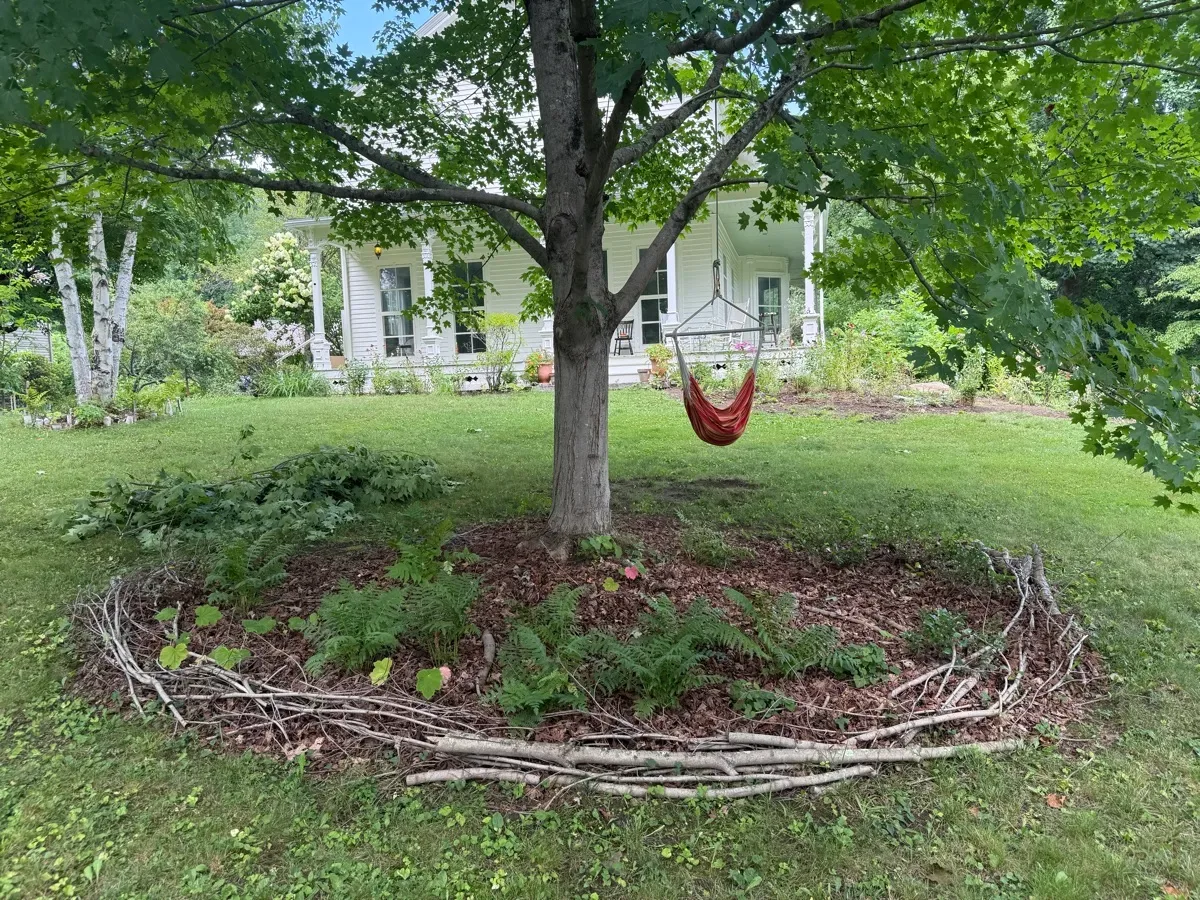
At home, she's using leaves to shrink her lawn. Almost all the caterpillars feeding in the leaves of a tree will then drop to the ground to pupate or overwinter, and a leafy bed gives them a far better chance of survival than mowed grass. Chris edged their beds with sticks to make “tree nests,” which keep feet out and feed the soil. Dead wood is one of the most biodiverse habitats a garden can have, she says, so figure out pretty and safe ways to keep it around.
Save the stems for spring, and cut them high
When cleanup does come, in spring, how you cut matters. At Brooklyn Bridge Park, her team cut hollow or pithy stems 18 inches high so they could shelter stem-nesting bees, and chopped the rest into roughly six-inch pieces that fell to become a natural mulch. She points to asters, Vernonia, Rudbeckia, and Penstemon as having especially good stems for nesting bees. Birds use old stems too: she recalls red-winged blackbirds building nests with swamp milkweed stems.
See what's already there
Sometimes the best move is not to plant. Seed banks under lawns and woodlands hold local plants that literally evolved there. When she let a patch of her lawn grow, fleabane came up everywhere. It had been there all along, getting mowed. That lawn is now its own planting area on her Place.
Plan your planting for next fall
Aside from a few species, she considers fall the best time to plant natives: roots establish over winter, and the next summer needs little watering. She also likes dividing plants in fall, as long as she's done six weeks before frost. She suspects America's habit of spring planting may be borrowed from British gardeners, who work in a much milder climate. Note: For most of us, mid-November is past that window, so put it on next fall's calendar.
At her place, she's moving wild geranium from the old sheep pasture into her new gardens. Her rule: wait until a plant is dormant, and take a big chunk of soil with it.
Your late-fall list
Leave the seed heads standing. Leave the leaves in your beds and under your trees. Keep the stems until spring. Then step outside on a cold morning and see who's using what you left. When something makes you wonder, snap a photo with Photo ID.
More from Rebecca
Subscribe to Grow Like Wild, her substack, for garden notes, research she's reading and more. You'll also find her on Instagram @oroeoboeococoao and in her Ted Talk, “Let Your Garden Grow Wild.”
You can also watch Rebecca's garden tour: Walk on the Wild Side, Episode 1: Inside America's Healthiest Yards.
Follow Rebecca's Place on Wildr
Rebecca and Chris planted the Butterbird Garden this spring. Follow their Place on Wildr Places to watch it through its first winter and see what comes back.
Follow Rebecca's Place on Wildr Places